
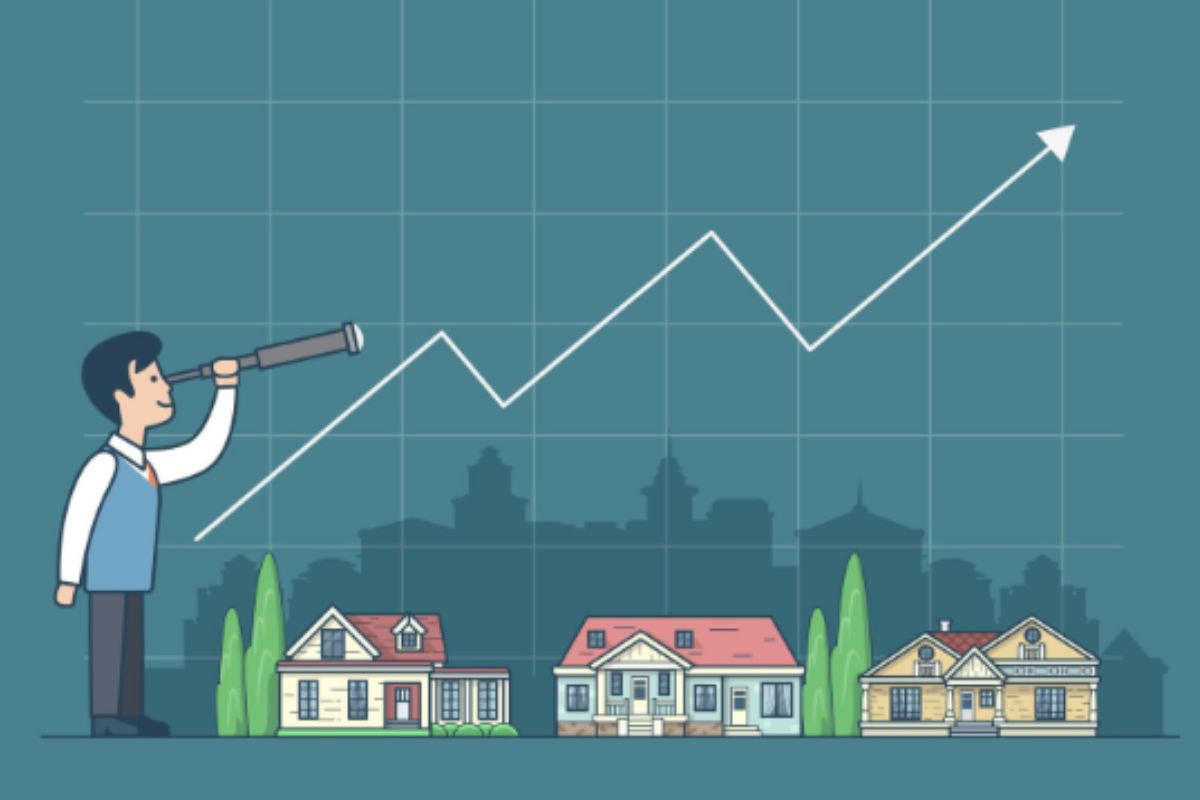
The housing market has experienced significant volatility in recent years, leaving buyers, sellers, and investors eager to understand what lies ahead.
As we look toward 2026, industry experts and major real estate organizations are painting a picture of cautious optimism, with expectations of market stabilization and gradual recovery from the challenges that have defined the post-pandemic era.
Price Projections Signal Moderate Growth
Housing price forecasts for 2026 suggest a return to more sustainable growth patterns after years of extreme fluctuations.
NAR predicts that, on a national basis, home prices will rise modestly—by about 1% in 2025—before accelerating to a projected 4% increase in 2026.
This acceleration represents a welcome shift from the market uncertainty that has characterized recent years.
The consensus among major forecasting organizations points to measured price appreciation.
The consensus view in their real estate forecast for next 5 years is that national home price growth will decelerate to 3.8% in 2025 and 3.6% in 2026.
These projections indicate that while prices will continue rising, the pace will be more manageable than the dramatic increases witnessed during the pandemic boom years.
Regional variations are expected to play a significant role in market dynamics. California, often considered a bellwether for national trends, is experiencing renewed optimism.
“Home prices in California are expected to rise in 2026, but the growth pace will remain mild when compared to rates we’ve seen in past years,” said C.A.R. President Heather Ozur.
This sentiment reflects broader expectations of market normalization across high-cost coastal markets.

Sales Volume Expected to Rebound Significantly
One of the most encouraging aspects of 2026 forecasts is the projected recovery in sales activity.
NAR Chief Economist Lawrence Yun forecasts a 11% increase in home sales for 2025 and 8% for 2026, with existing-home sales to rise 13% year-over-year and new home sales to increase by 8%.
These projections suggest that pent-up demand from buyers who have been waiting on the sidelines will finally translate into market activity.
The Canadian market mirrors these optimistic trends. In 2026, national home sales are forecast to rebound by 6.3% to 499,081, indicating that the recovery extends beyond U.S. borders.
However, this rebound comes with caveats, as it would still represent the fourth consecutive year with sales failing to reach the half-million mark.
For many markets, this increased activity represents a welcome return to more balanced conditions.
Sellers who have been hesitant to list their properties due to limited replacement options may find more confidence in a market with improved inventory levels and more predictable pricing patterns.
Mortgage Rate Stabilization Around 6%
Interest rates will remain a critical factor shaping market conditions in 2026.
Data gathered by experts from Fannie Mae and NAR predict that rates will stabilize at the low 6% level, with the potential to dip to the 5.8% level later in the year.
While these rates remain elevated compared to the historically low levels of recent years, their stabilization should provide the predictability that both buyers and sellers need to make informed decisions.
The mortgage rate environment will be particularly important for first-time buyers, who have been disproportionately affected by affordability challenges.
The National Association of REALTORS® forecasts mortgage rates to stabilize near 6% in 2025, likely establishing a new normal. At this rate, more buyers are expected to come back to the market, boosting activity.
This stabilization is crucial for market confidence, as rate volatility has been one of the primary factors contributing to buyer hesitation and market uncertainty.
For sellers looking to transition to new properties, programs like a Guaranteed Home Sale Program can provide valuable security during periods of market adjustment, ensuring they can secure their next home even while their current property remains on the market.

Inventory and Market Balance Improvements
The supply side of the housing equation is expected to see meaningful improvements by 2026.
Market predictions in 2026 showcase less frenetic competition, more listings to select from, and negotiating clout with which to negotiate better terms in markets recovering from inventory shortfalls.
This shift toward a more balanced market represents a significant departure from the seller-dominated conditions that have characterized much of the post-pandemic period.
The multifamily rental market is also showing signs of stabilization. Following a period of rapid new deliveries, the multifamily market is moving toward stabilization as demand remains strong and the influx of new supply diminishes.
We expect continued improvements in occupancy rates and gradual rent growth throughout 2025 and into 2026.
Economic Factors and Market Outlook
The broader economic context will continue to influence housing market dynamics in 2026. While the Fed forecasts a rebound by 2026 and 2027, growth is expected to remain muted at 1.6% to 1.8%.
This modest economic growth projection suggests that while the housing market may recover, it will likely do so within the context of a generally restrained economic environment.
Despite these challenges, the overall outlook for 2026 is cautiously optimistic. By 2026, the housing market is expected to be more balanced, with moderate price increases, stable interest rates, and increased sales activity.
This balance represents what many industry professionals have been hoping for: a return to more normal market conditions that serve both buyers and sellers effectively.
The convergence of stabilizing interest rates, improving inventory levels, and pent-up demand from both buyers and sellers creates conditions for a more functional housing market in 2026.
While challenges around affordability and economic uncertainty will persist, the trajectory appears to be moving toward greater market equilibrium than has been experienced in recent years.
